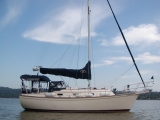
Another "fuel" tale:
After we bought our first sailboat, a Catalina 27, my son and I were bringing her from Warwick, RI to her new homeport @ Newburyport, MA--a long three day trip. I checked the fuel tank gauge before we left and it read full!
We sailed some down Narragansett Bay, but once outside in Block Island Sound and up through Buzzards Bay it was a long slog in sloppy seas and the wind on the nose so we went to the diesel. The second night we took a berth in Sandwich Harbor and the gauge said the 18 gallon tank was still 1/2 full which would be about right based upon the running time. The next day's run from the eastern end of the Cape Cod Canal to Newburyport is another long haul, so I filled the tank. A wise decision--I put 17 1/2 gallons into an 18 gallon tank!
The boat was only two years old, and in my wildest dreams, I wouldn't have thought the gauge would fail so quickly. I haven't fully trusted diesel gauges in boats since. It was a good lesson, cheaply learned, and now I always keep track of engine hours between fillings.
When we bought our IP32 she was 15 years old, and one of the first things I did was check the gauge reading vs. the amount of fuel it took to fill, that gauge was way off too.
Since that first Catalina experience, when filling up I always note the gauge reading and the gallons it take to fill. Over the years I have been able to make up a reasonably accurate chart of gauge readings at 1/4, 3/8 1/2, 5/8, & 3/4 vs. gallons to fill and always after filling check the gallons bought against what I think it should have taken. With the new vertical type WECO gauges the readings have always been close.
Jim Campbell
IP32 #1
South Wind