- Posts: 5
- Thank you received: 1

- Forum
- Ask for System Help / Share Solutions
- Yacht Systems
- Woodwork & Teak
- The teak refinishing has begun
The teak refinishing has begun
- painkiller380
-
 Topic Author
- Offline
- New Member
-

Less
More
13 years 5 months ago #2001
by painkiller380
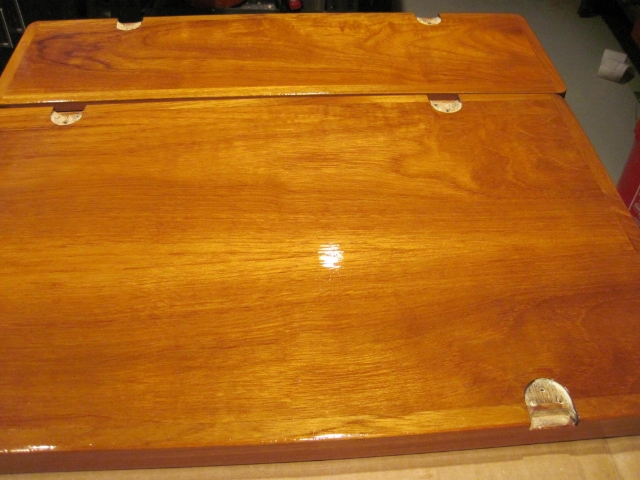
Here is the refinished cockpit table on our IP 380. We took most of the teak that could be removed home for the winter to start the process. Cockpit table, cafe doors for the companionway, hatch boards, the lids for the line lockers. If the weather starts cooperating, we can start the process of doing the teak still attached to the boat.
We were able to get our process down over the winter before we tackle the teak on the boat itself. We stripped the old finish with citristrip. And this photo is after several coats of Epiphanes High Gloss varnish. Very happy with the results so far, however we have a long way to go and lots more work ahead!
The teak refinishing has begun was created by painkiller380
Here is the refinished cockpit table on our IP 380. We took most of the teak that could be removed home for the winter to start the process. Cockpit table, cafe doors for the companionway, hatch boards, the lids for the line lockers. If the weather starts cooperating, we can start the process of doing the teak still attached to the boat.
We were able to get our process down over the winter before we tackle the teak on the boat itself. We stripped the old finish with citristrip. And this photo is after several coats of Epiphanes High Gloss varnish. Very happy with the results so far, however we have a long way to go and lots more work ahead!
Please Log in or Create an account to join the conversation.
- hayden
-

- Offline
- Moderator
-

13 years 5 months ago #2002
by hayden
Hayden Cochran
IP35-165 Island Spirit
IslandSpirit35.blogspot.com
Rock Hall, MD
Replied by hayden on topic Re: The teak refinishing has begun
WOW, that is perfect and so beautiful. I dream of someday varnishing the interior of our IP35, 1994 model. I too did this to our cockpit table and it last for many years. You will get many years of rewards and enjoyment out of this kind of work. Congrats and thanks for sharing this photo.
Hayden in Hope Town Bahamas
Hayden in Hope Town Bahamas
Hayden Cochran
IP35-165 Island Spirit
IslandSpirit35.blogspot.com
Rock Hall, MD
Please Log in or Create an account to join the conversation.
- Emergpa1
-

- Offline
- Elite Member
-

Less
More
- Posts: 176
- Thank you received: 8
13 years 4 months ago #2035
by Emergpa1
Replied by Emergpa1 on topic Re: The teak refinishing has begun
Did u start the exterior yet? What are your plans for prepping the teak before you apply the finish? The prep work is, of course, the most important step to a durable finish.
Please Log in or Create an account to join the conversation.
- painkiller380
-
Topic Author
- Offline
- New Member
-
Less
More
- Posts: 5
- Thank you received: 1
13 years 4 months ago #2036
by painkiller380
Replied by painkiller380 on topic Re: The teak refinishing has begun
The only exterior work that we have started so far, are the lids for the cockpit line lockers, which we removed and brought home. Minnesota weather has been less than cooperative. To prep, we stripped the old finish with citristrip. Takes about 3 runs at it to get all the old finish removed. Then I used a one part teak cleaner/brightener. These exterior pieces have some dark areas that I wasn't really happy with that still remained after using the one part teak cleaner, so we used a 2 part teak cleaner that has a mild acid in it. I was very happy with the results of the two part teak cleaner/brightener. Then sanded to remove the raised grain and ensure everything was smooth prior to the first coats of varnish.
You might be interested in the varnishing steps/process that we are utilizing that I adopted from another fellow sailor/teak refinisher which is outlined below:
Now that the wood is scrapped, sanded and fared, comes the the sealer coats. But before that wet out and wipe liberally with turpentine, changing rags often, do this just before the first sealer coat.
Now to the sealer, my recipe is as follows 25% same of the varnish that will be used for topcoats, 60% penetrol, and the balance turpentine. I apply in about 3-4 foot square areas, then I go back and wet sand it into the wood with 180 wet paper. Keep moving in 3-4 sq.ft areas, at the end of the second application area go back to the first section, and wipe the excess sealer diagonal to the grain with a heave burlap. Keep working until all of the first sealer coat is applied.
This method cause all of the soft grains to rise, and the wet sanding knocks em down, the slurry created by the wet sanding fills in the pores in the soft grain.
Now after about two hours or when things are starting to tac up, apply a second coat of sealer, this time mixed 50-50 varnish and penetrol with a splash of turpentine. Lay down a nice even coat. The next day go back and scuff with a green scrubber just enough to knock off any roughness, and and shine. Wipe with turpentine and clean rags. The apply a coat of varnish mixed 75% varnish, and 25% penetrol with a splash of turpentine.
Now you have accomplished 2 things 1. you've created a bonding coat that will move with the wood, and 2. created the perfect tie coat on which you will lay down the rest of your varnish.
Wait about 2-3 days so everything can off gas. Now sand with 320 dry paper just enough to take off the shine, uses a new green scrubber to work any areas that the sand paper didn't dull, vacuum, and wipe with turpentine and clean rags.
Next apply your first coat of varnish use it full strength, and only add enough penetrol to keep the brush from dragging. Next day do the same, the following day do the same. By this time you should have on 3 coats of full strength varnish on.
Now comes time for my secrete weapon. Varnish fails for a number of reasons, movement of the wood, which we solved with the penetrol sealer coat. UV degradation at the wood to sealer/varnish interface which we will solve next.
Now you're going to varnish the next 2 coats with semi-gloss of the same brand as your gloss topcoat. Using the same sanding and turpentine wipe as before, with just a splash of penetrol. Semi-gloss has a particulate oxide that gives the varnish a semi-gloss appearance. But if you're going to all the work of a proper varnish job it better be gloss.
What these 2 coats of semi-gloss due is act a UV filter, when dry it does not hide the beauty of the wood grain. As long as you don't stop here. What it does do is cause the UV to scatter before it gets a chance to hit the wood to sealer coat interface in a direct fashion.
Now were are going to do 4 coats of high gloss varnish using the same sanding/turpentine regime.
That's all the varnish we will put on for the next 9 months to a year, depending on location.
Next year we want to hit it again with 4- 6 coats of straight varnish, sanding and turpentine, with just enough penetrol to keep the brush from dragging.
Now all you have to do is a couple of refresher coats. If in the tropics you will need do them once a year, if in the Northern latitudes you may only need do them every 3 years.
You might be interested in the varnishing steps/process that we are utilizing that I adopted from another fellow sailor/teak refinisher which is outlined below:
Now that the wood is scrapped, sanded and fared, comes the the sealer coats. But before that wet out and wipe liberally with turpentine, changing rags often, do this just before the first sealer coat.
Now to the sealer, my recipe is as follows 25% same of the varnish that will be used for topcoats, 60% penetrol, and the balance turpentine. I apply in about 3-4 foot square areas, then I go back and wet sand it into the wood with 180 wet paper. Keep moving in 3-4 sq.ft areas, at the end of the second application area go back to the first section, and wipe the excess sealer diagonal to the grain with a heave burlap. Keep working until all of the first sealer coat is applied.
This method cause all of the soft grains to rise, and the wet sanding knocks em down, the slurry created by the wet sanding fills in the pores in the soft grain.
Now after about two hours or when things are starting to tac up, apply a second coat of sealer, this time mixed 50-50 varnish and penetrol with a splash of turpentine. Lay down a nice even coat. The next day go back and scuff with a green scrubber just enough to knock off any roughness, and and shine. Wipe with turpentine and clean rags. The apply a coat of varnish mixed 75% varnish, and 25% penetrol with a splash of turpentine.
Now you have accomplished 2 things 1. you've created a bonding coat that will move with the wood, and 2. created the perfect tie coat on which you will lay down the rest of your varnish.
Wait about 2-3 days so everything can off gas. Now sand with 320 dry paper just enough to take off the shine, uses a new green scrubber to work any areas that the sand paper didn't dull, vacuum, and wipe with turpentine and clean rags.
Next apply your first coat of varnish use it full strength, and only add enough penetrol to keep the brush from dragging. Next day do the same, the following day do the same. By this time you should have on 3 coats of full strength varnish on.
Now comes time for my secrete weapon. Varnish fails for a number of reasons, movement of the wood, which we solved with the penetrol sealer coat. UV degradation at the wood to sealer/varnish interface which we will solve next.
Now you're going to varnish the next 2 coats with semi-gloss of the same brand as your gloss topcoat. Using the same sanding and turpentine wipe as before, with just a splash of penetrol. Semi-gloss has a particulate oxide that gives the varnish a semi-gloss appearance. But if you're going to all the work of a proper varnish job it better be gloss.
What these 2 coats of semi-gloss due is act a UV filter, when dry it does not hide the beauty of the wood grain. As long as you don't stop here. What it does do is cause the UV to scatter before it gets a chance to hit the wood to sealer coat interface in a direct fashion.
Now were are going to do 4 coats of high gloss varnish using the same sanding/turpentine regime.
That's all the varnish we will put on for the next 9 months to a year, depending on location.
Next year we want to hit it again with 4- 6 coats of straight varnish, sanding and turpentine, with just enough penetrol to keep the brush from dragging.
Now all you have to do is a couple of refresher coats. If in the tropics you will need do them once a year, if in the Northern latitudes you may only need do them every 3 years.
The following user(s) said Thank You: Emergpa1
Please Log in or Create an account to join the conversation.
- Emergpa1
-
- Offline
- Elite Member
-
Less
More
- Posts: 176
- Thank you received: 8
13 years 4 months ago #2037
by Emergpa1
Replied by Emergpa1 on topic Re: The teak refinishing has begun
Excellent and informative rundown of your refinishing process.
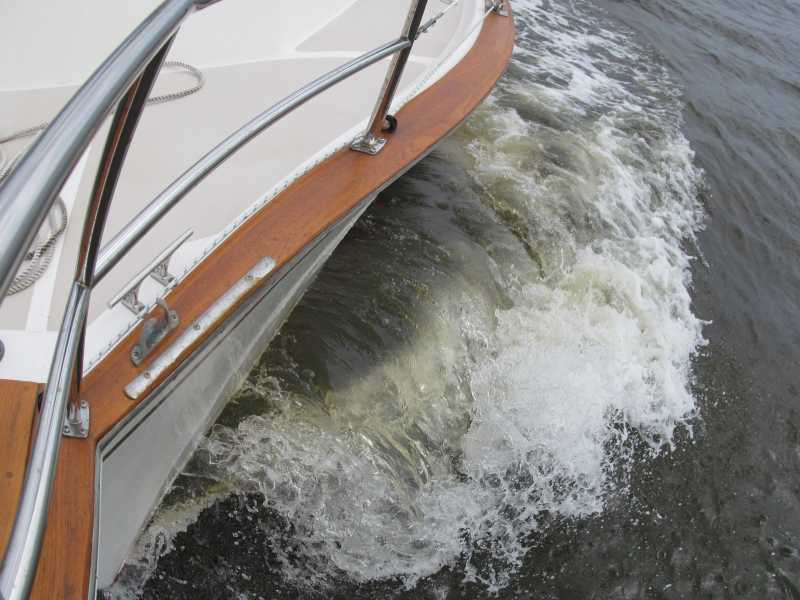
I refinished an o'Day26 that I rebuilt. I took the teak off of her and sanded it down then sealed it with Cetol. I used the natural teak. It was very old and although I sanded and got most of the black off, I did not use any teak cleaner.. Unfortunately the deeper areas of grain retained some rotted and molded wood and it bled through pretty quickly in our hot southern sun.
So I learned that if I cannot get the softened wood off that that is going to be the weak point. On my newly acquired Island packet 31 the prior owner, just before selling, refinished the exterior teak and did a pretty good job of it. I believe he used cetol also. Unfortunately though he also left some darkened and unclean areas underneath his finish and that is going to be a weak spot.
My question at this point would be how can i use a teak cleaner, particularly a two part cleaner, with the teak still attached to the boat? Or is that possible.
I guess the best answer is "very carefully!"
thanks
keith
I refinished an o'Day26 that I rebuilt. I took the teak off of her and sanded it down then sealed it with Cetol. I used the natural teak. It was very old and although I sanded and got most of the black off, I did not use any teak cleaner.. Unfortunately the deeper areas of grain retained some rotted and molded wood and it bled through pretty quickly in our hot southern sun.
So I learned that if I cannot get the softened wood off that that is going to be the weak point. On my newly acquired Island packet 31 the prior owner, just before selling, refinished the exterior teak and did a pretty good job of it. I believe he used cetol also. Unfortunately though he also left some darkened and unclean areas underneath his finish and that is going to be a weak spot.
My question at this point would be how can i use a teak cleaner, particularly a two part cleaner, with the teak still attached to the boat? Or is that possible.
I guess the best answer is "very carefully!"
thanks
keith
Please Log in or Create an account to join the conversation.
- cbish495
-

- Offline
- New Member
-
Less
More
- Posts: 2
- Thank you received: 0
13 years 1 month ago #2149
by cbish495
Replied by cbish495 on topic Re: The teak refinishing has begun
I recently stripped, restained and varnished my cockpit table, a real project, but so worth the effort. I congratulate you on your finished product. Refinishing that , the stair steps and entry teak, wood cabin panels and captains seat teak this past 6 months was very worthwhile. I am reluctant to refinish the teak around my 370 IP since it was stripped by the original owner 5 years ago who wished not to be occupied with refinishing it every year.
Please Log in or Create an account to join the conversation.
- Forum
- Ask for System Help / Share Solutions
- Yacht Systems
- Woodwork & Teak
- The teak refinishing has begun
Time to create page: 0.227 seconds
We have 853 guests and no members online
Disclaimer
Island Packet and Island Packet Yachts are registered trademarks of IPY (Island Packet Yachts, Inc.). IPYOA and The Island Packet Yacht Owners Association, have no affiliation with IPY, the Island Packet Yacht Company. Throughout our IPYOA Facebook Group and on this IPYOA.com website the terms Island Packet and Island Packet Yachts are used for identification purposes only. This use is FAIR USE and NOMINATIVE. We are NOT a yacht manufacturer we are a yacht owners group.
Sincerely,
The International IPYOA administration team.