

Estrellita in the San Blas Islands
Friday - February 22, 2008•Views: 4766••
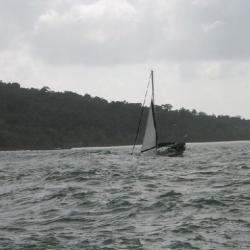
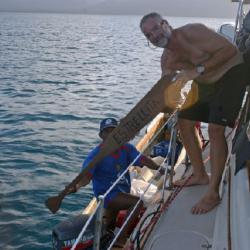
Estrellita spent most of January and February 2008 sailing from South to North in the San Blas Islands, home to the reclusive Kuna Indians. The Kunas have made a conscious decision to maintain the traditions and culture of their past. While some villages do have some electricity in a public area and the children wear the clothes that you would see on kids on any summer day in any park or playground in Middle America, the cultural traditions are followed with purpose. While these folks live traditional lives, there is not what you would call poverty. Everyone is well fed, clothed and loved.
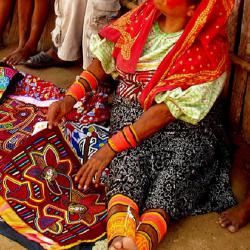
As I write this, we are in the more remote southern area of the San Blas, visited only by a few cruising sailors like us. No cruise ships. No airport or ferries. The men mostly fish and farm coconuts and sugar cane. The women hand sew colorful quilted pieces that they have traditionally used in clothing. These pieces are called Molas and now have become a principal export of the Kunas in these remote regions. The women spend weeks and months creating these pieces that range in size from a small 5inch by 5inch patch to a 20 x 26inch patch that they sell to visitors.
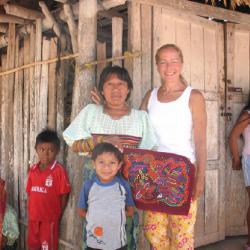
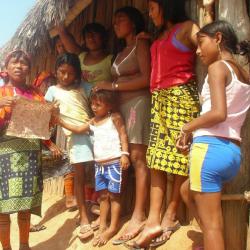
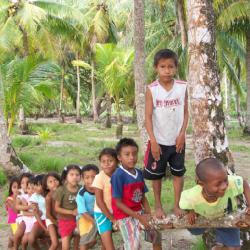
The women mostly wear the traditional Mola adorned blouse with a stiff cotton wrap for a skirt. They also wear an intricate bead wrap on their forearms and calves. They often have a line tattooed down the center of their nose, sometimes you see other facial tattoos. Adult women often wear a gold pin through the nose and very often a red dye in prominent display on their cheeks and the bridge of their nose. The men on the other hand wear tank tops and cotton work pants or shorts. The kids dress much like kids in the states in t-shirts and shorts.
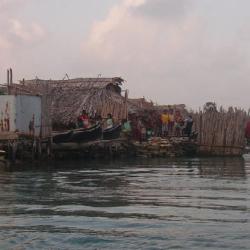
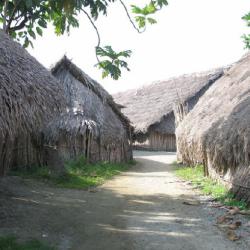
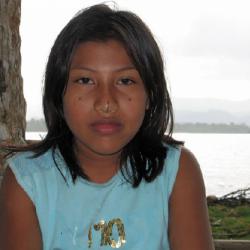
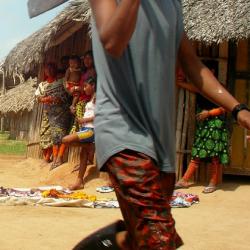
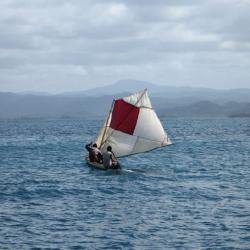
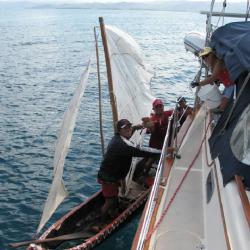
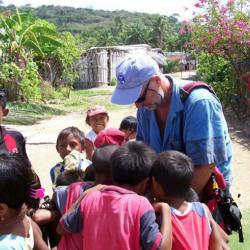
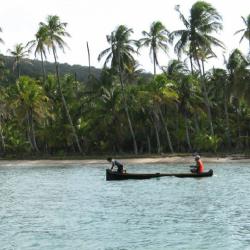
These photos are not of a theme park or tourist trap. These photos are of the regular everyday Kuna people at work or play doing what they have done for generations. These photos are of the main village. There is no modern building or paved street around the corner. No doctor office, restaurant or parking lot on the next block. The entire village is made up of bamboo walls and palm leaf roofs and dirt paths. We saw no bicycles or wheelbarrows. No satellite dishes or running water. The family pigs are kept cool and comfy in 5x5 pens built over the water, the outhouse is a palm frond hut on stilts over the water. Cooking is done over an open fire, transportation is a dugout canoe with hand carved paddles. Women are shy, men are hard working and children play with abandon.

Powered by SIMGallery from SIMBunch